At Agilité, we’ve always sought to create spaces that respond not only to current needs but anticipate the future, too. And, as conversations around office design continue to evolve – shaped by the generational changes we’ve been experiencing in how people work, socialise and connect – our operations director, Cormac O'Sullivan, has been taking a closer look at some of the key themes for 2025.
Flexibility remains one of the cornerstone trends for the year ahead, as we continue to see the traditional office layout give way to multi-purpose environments that can adapt to different uses throughout the day. Moveable furniture, modular workstations, and spaces designed for dual purposes allow organisations to maximise real estate while empowering employees to choose how and where they work – as seen in our recent work for Colliers Global Investors SGR Spa in Milan, Italy.
This creates obvious benefits for landlords, companies, and colleagues – no need to compromise. The world of business is experiencing a shifting relationship with the traditional office, and flexibility can facilitate a potentially safe investment for organisations and a stylish, comfortable location for colleagues.
Take our project with The Social Hub in Glasgow as a case in point – a building that encapsulates many of the key trends shaping the office environments of tomorrow. As a fellow certified B Corp, The Social Hub asked us to create a dynamic, multi-functional, communal environment, to fit with its unique ‘hybrid hospitality’ approach. The result is a forward-looking space that celebrates flexibility and fosters community - a philosophy increasingly at the heart of modern office design.


By incorporating features like adaptable furniture, movable drinks bars and increasingly, decor akin to trendy coffee shops – spaces which can transform effortlessly from a productive workspace to an event venue are on the up. Like The Social Hub, this adaptability is precisely what more organisations are seeking as they navigate hybrid work models and evolving employee expectations.
Equally important is the emphasis on creating spaces that feel comfortable and inviting – a theme we see reflected in the growing preference for designs inspired by residential and hospitality environments and a further blurring of the lines between such styles. By incorporating soft furnishings, warm lighting and informal seating areas, we can transform offices into spaces that people genuinely enjoy spending time in – such as this financial firm’s Parisian HQ. Such an approach not only enhances employee well-being but also encourages meaningful interaction and collaboration during face-to-face periods.
Another prominent component is the genuine integration of technology into office design. As organisations embrace smart building systems, features like app-controlled lighting, climate settings and occupancy sensors are becoming standard – innovations which help to create a seamless user experience while also supporting sustainability goals by reducing energy consumption. After all, on a busy day in the office, work itself is likely the primary concern of an employee, not necessarily a carbon footprint. Therefore, making sustainable choices as easy and seamless as possible is vital to helping everyone make the right impact.
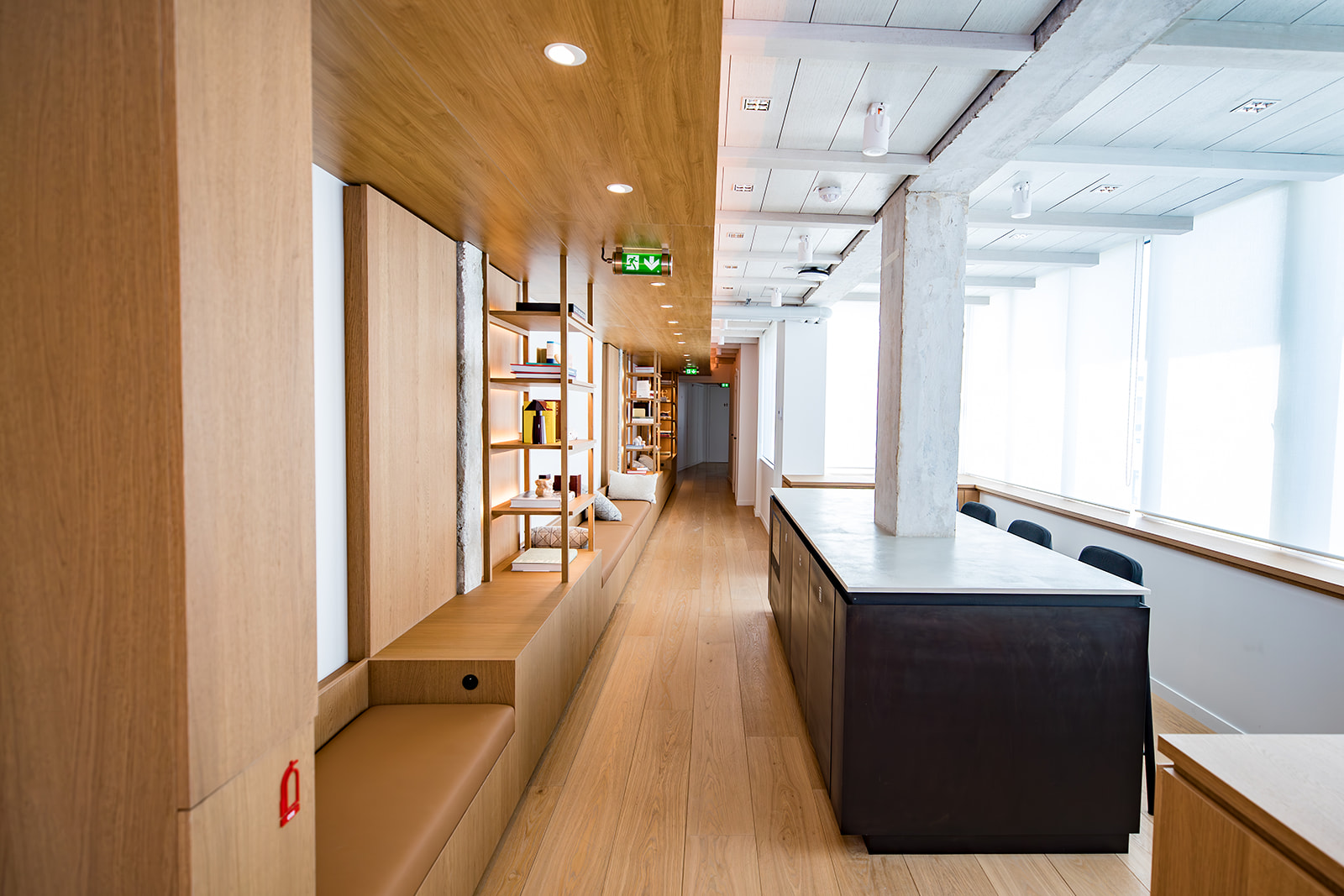
Wellbeing is another key driver of change, with workplaces needing to support both mental and physical health – as Scalapay demonstrated with its Italian office. Acoustic privacy, access to natural light and quiet zones for focused work is gaining prominence, as is the integration of spaces for relaxation and rejuvenation. Increasingly, we’re seeing sound-proofing elements designed specifically to interact beautifully and seamlessly with spaces – a significant improvement on the ‘standard’ foam tiles we commonly associate with sound isolation.
As it becomes clearer than ever that the office is no longer simply a place to ‘get work done’, but a place to connect, innovate, and grow, we’re witnessing architects and designers placing even more attention on circular principles – particularly when it comes to using materials that can be repurposed or recycled, while also giving time and consideration to the eventual strip-out, long before the fit-out has even taken place.


Whether it’s through pioneering projects like The Social Hub or embracing the next big trend, our mission remains the same - redefining spaces to meet the needs of today while anticipating the demands of tomorrow.
careers@agilitesolutions.com
FR +33 (0) 1 88 61 81 31
UK+44 (0)7 506 403 069
IT +39 (0) 350 9646921
LUX +352 (0) 621 481 103


"*" indicates required fields


