
Hospitality has always been shaped by experience, but the conversations at this year’s Hospitality Design Day, hosted by Teamwork in Milan made one thing particularly clear: the sector is becoming more commercially disciplined, design-conscious and nuanced in how success is defined.
Hosted at the Meliá Hotel on 5 May, the event brought together voices from across the hospitality investment and development market, with a particular focus on the current dynamics shaping Italy’s hotel sector. For Maria Luisa Daglia, country head at Agilité Italy, it was a valuable opportunity to step back from the day-to-day delivery of projects and reflect on where the market is moving, as investors, operators and delivery teams continue to balance ambition, feasibility and long-term value.
One of the most interesting points raised was that the Italian hospitality sector remains strongly characterised by small to medium-sized operators. Many projects still sit within the 50–100 room range, even within the five-star segment.
That matters because there can be an assumption that smaller projects are simpler to deliver. In reality, smaller does not always mean easier. A compact hotel may have fewer rooms, but it still needs a strong concept, a clear operational model, well-considered design and disciplined delivery.
Project scale can influence complexity, particularly when it comes to staffing, phasing, procurement and long-term operations, but it is not the defining factor in whether a project succeeds. The quality of the idea and the ability to execute it well, are often far more important.

In a competitive hospitality market, design cannot simply be attractive. It needs to be purposeful. The strongest hospitality projects are those with a clear identity, where the guest experience, operational requirements, brand positioning and physical environment all work together. That does not necessarily mean creating something loud or overly designed, but can often mean being very clear about what the project is trying to achieve, who it is for, and how the space needs to perform.
This is particularly important in smaller or more niche developments, where every decision carries weight. If the concept is weak, unclear or inconsistently delivered, there is less room to hide. But when the concept is strong, even a smaller project can create a memorable guest experience and a commercially resilient asset.
The event highlighted how financial structuring remains broadly consistent across hospitality projects, regardless of size. Business planning, feasibility, return expectations and investment discipline are still central to the process – however, size does affect the risk profile.
Smaller developments can face more constrained access to financing, with banks applying stricter criteria and looking more closely at risk. Since the 2019 crisis, there has also been a noticeable increase in the use of guarantees to support bank financing for hospitality investments.
This puts greater pressure on project teams to manage cost, timing and delivery with real precision. Risk control becomes essential – not only during construction, but from the earliest stages of planning and feasibility. For smaller operators in particular, a delay, design change or cost overrun can have a disproportionate impact.
That is where experience matters, and the more complex the market becomes, the more important it is to bring together teams that understand both the commercial and operational realities of hospitality.
Another theme that came through was the variation in investor strategies. For some, prime locations remain the priority as these sites offer visibility, established demand and long-term value. But others are deliberately targeting secondary or more niche destinations, often driven by a more distinctive positioning strategy.
This reflects a broader shift in hospitality, where guests are not only looking for convenience but character, experience and a sense of place. For investors and developers, that opens up opportunities beyond the obvious markets, but it also demands a deeper understanding of the destination, the audience and the concept.
A project in a secondary location cannot rely on footfall or reputation alone. It needs to know exactly why people will come, what will make them stay, and how the experience will be different enough to justify the journey.
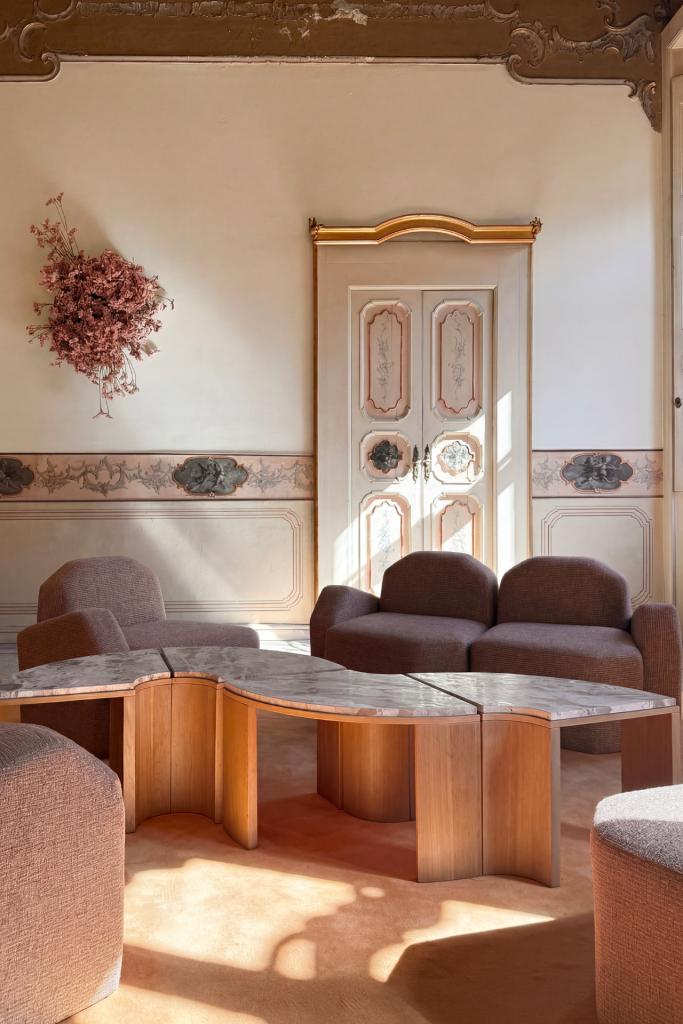
Perhaps the clearest takeaway was that while the methodology behind hospitality development may be broadly consistent, smaller projects bring their own operational constraints and decision-making dynamics.
They often require tighter phasing, closer cost control, faster decision-making and a more hands-on approach from investors and operators. The margins for error can be smaller, and the need for alignment between concept, budget and delivery is even greater.
This is where tailored delivery becomes important. A standardised approach will only get a project so far. The best outcomes come when the team understands the specific pressures of the scheme – from financing conditions and procurement routes to guest expectations and operational requirements.
In hospitality, the details matter – but the discipline behind those details matters just as much. Whether a project has 50 rooms or 500, success depends on the same underlying principles: a strong concept, a realistic plan, and the ability to deliver both with confidence.
careers@agilitesolutions.com
FR +33 (0) 1 88 61 81 31
UK+44 (0)7 506 403 069
IT +39 (0) 350 9646921
LUX +352 (0) 621 481 103
DE +49 30 2239 9548 83



"*" indicates required fields


