
Clerkenwell Design Week is always a useful moment to step back from day-to-day project delivery and listen to where the wider design conversation is heading. Alongside visiting the many showrooms and installations at this year’s event, there’s a full roster of conversations and panel discussions and the Design Milk talks offered plenty to think about – particularly around brand integrity, workplace change, nature, wellbeing and the spaces people actually want to use.
Across the sessions, one theme came through clearly – good design is not just about how a space looks, but how it behaves, how it supports people, and whether it reflects the values of the organisation behind it. Here are five takeaways that stood out.

One of the early sessions explored what it means to build a brand with integrity, and what was interesting was how quickly the discussion moved beyond logos, websites and external communications. Listening to the talk, our head of communications agreed that a strong brand does not come from saying the right things, but from consistency – in leadership, values, decision-making, people and the spaces an organisation creates.
That feels particularly relevant in workplace design, too. If an office is meant to express a company’s culture, it cannot simply be a ‘real life’ edition of the brand guidelines, but needs to reflect how people actually work, collaborate and connect.
As one speaker put it, people “buy from people”, and colleagues need to understand and believe in the brand before they can help others experience it – particularly when they’re inviting potential colleagues, collaborators and clients to step into your space.
In that sense, the workplace becomes part of the storytelling, and is where values either become visible, or start to feel hollow.
Another recurring theme was ‘trust’, not just in leadership, but in how organisations think about space.
There was a useful challenge around the idea of designing workplaces that do not fully trust the people using them. If colleagues feel they have to “perform” when they are in the office – for example, be seen to be working really hard – or if the space is shaped around supervision rather than purpose, something has gone wrong.
This conversation let to a discussion around change management, which was especially interesting. People are more likely to embrace a new workplace when they understand the value of each touchpoint, have opportunities to contribute, and feel part of the journey rather than on the receiving end of a finished decision.
It was a reminder that change management does not begin at the end of a project but early on – through listening, storytelling, clear communication and genuine involvement.
A lot of the notes came back to the same simple idea: people do not use the office in one way. We’ve heard this a lot through the panels and thought-leadership content we’ve heard and participated in this year – sometimes colleagues need focus, sometimes it’s collaboration, sometimes they want to learn, connect, reset or simply be around other people.
The problem is that many workplaces still expect one environment to support all of those modes equally, but perhaps where flexibility has that ability to become more than a workplace buzzword but a practical response to human behaviour.
One really interesting conversation focused on generational expectations and the experts talked about many younger colleagues seeking ‘experience’, but not necessarily in the form of spectacle. They want to learn, think, connect and feel that the office offers something they can’t get elsewhere. If they are going to commute, the space needs to earn that journey.
For designers and employers, that means being much clearer about what the office is for, and creating environments that support the full rhythm of work, not just desk-based output.
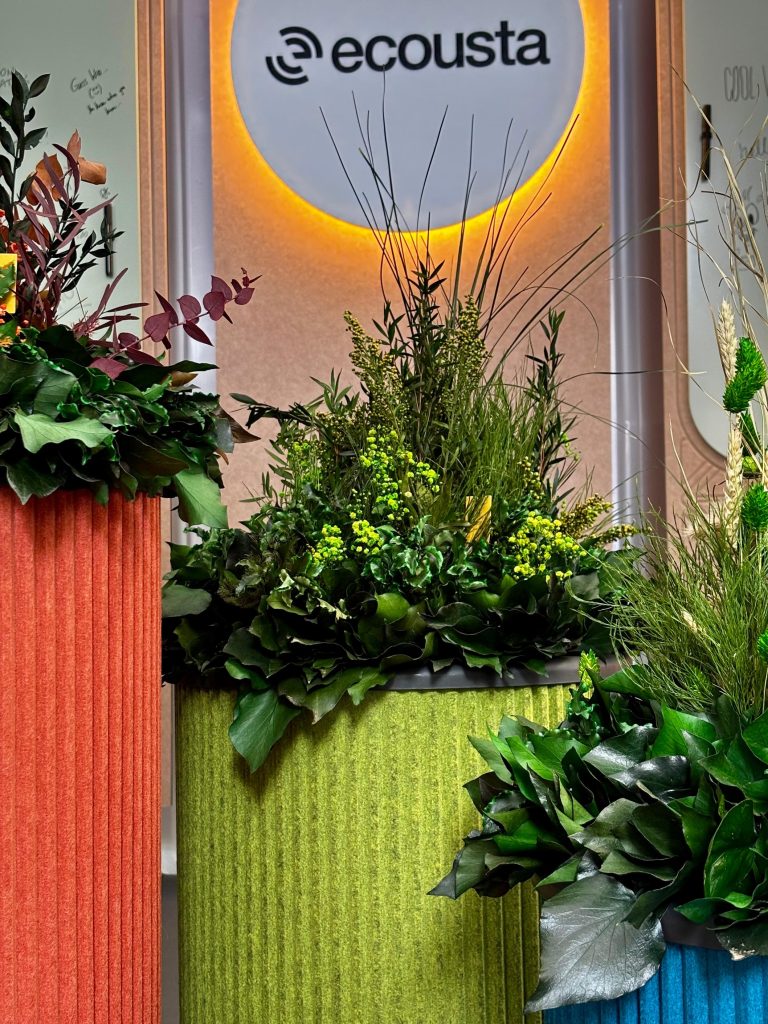
The final session on nature and wellbeing brought together several ideas that have been coming through across the industry this year. When we think of biophilia, a lot of thoughts go straight to ‘plants and greenery’ but the conversation went much further than that and looked at sensory experience, cognitive impact, connection, atmosphere and the way people physically respond to their surroundings.
With delegates asked to imagine ‘a safe, tranquil place in their minds’, around 95% of these contained water, trees and plants – strong evidence of how much nature-led design has the potential to alter our mood and responsiveness within a space. If we consider materials, light, sound and views, timber, greenery, fresh air, daylight and outdoor space all influence how a workplace feels, and often in ways that are difficult to quantify, but easy to recognise when they are missing.
There was a strong challenge around preserved or artificial planting, too. Although it may be easier to maintain, it does not offer the same connection as something living. If people can touch a plant, they know whether it is real, and if the intention is to support wellbeing, that authenticity matters.
One of the most practical points raised was around measurement. Too often, success is judged at handover, when the space looks finished and the project is complete. But the real test comes later – are people using it as intended? Does it support the behaviours it was designed to encourage? Has it improved experience, wellbeing, collaboration or performance?
Post-occupancy surveys, informal feedback, observation and usage data all have a role to play as they help teams understand what worked, what needs adjusting and what can inform the next project. At Agilité, we seek out NPS scores and stakeholder feedback when we win, lose, and complete projects, to help with continuous improvement internally, too.
In all, Clerkenwell Design Week was a useful reminder that the most effective spaces are rarely the ones trying hardest to impress. They are the ones that understand people, support change, and make the organisation behind them feel coherent.
careers@agilitesolutions.com
FR +33 (0) 1 88 61 81 31
UK+44 (0)7 506 403 069
IT +39 (0) 350 9646921
LUX +352 (0) 621 481 103



"*" indicates required fields


