
Without talent, there is no business. Your colleagues are your greatest asset and reducing the risk of losing them is critical to futureproofing your business. With that in mind, here’s a guest blog from our friends at The Tenant Solution (a Spanish tenant representation firm), which looks at how savvy office design can aid staff retention.
People are the backbone of success and the ones who will keep your business moving and thriving – particularly as topics such as creativity, customer service and communication are skills exclusive to human beings, not to technology or systems.
Too often, organisations focus on reducing financial risk – but losing your best collaborators can be just as damaging to your brand, reputation and performance. Therefore, as with any risk – whether economic, financial or environmental – it is important to identify it, plan to mitigate it and execute the plan to ensure that the risk is minimised.
This is where your physical office can play a starring role.
A well-designed work environment improves employee satisfaction and boosts wellbeing – while being a determining factor in talent retention. That’s why addressing this issue is a priority for any company that wants to retain its top talent and secure a prosperous future. It needed be ‘all open plan’ or a network of cosy spaces though – both have their merits. Open offices encourage collaboration and communication, while closed spaces offer privacy and an atmosphere to support tasks that require concentration. As such, a hybrid approach, combining open and closed spaces, may be the best solution.
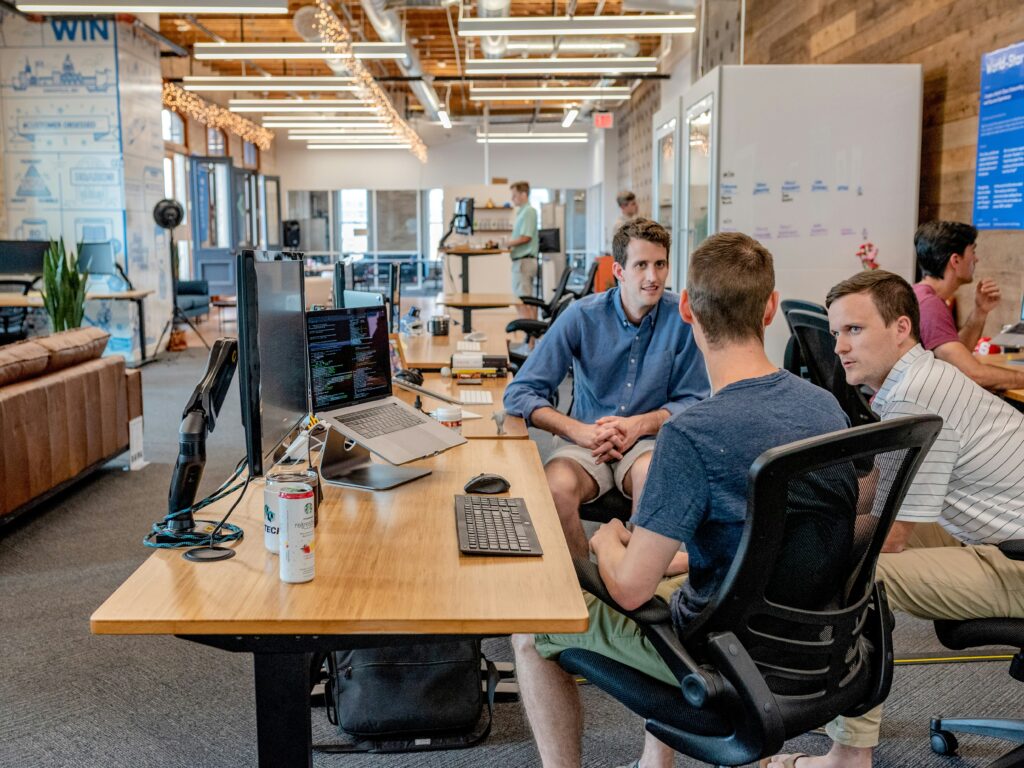
The importance of physical space in job satisfaction
Physical space in the office environment refers to all the tangible elements that make up the workplace – from furniture design and space layout, through to lighting and ventilation. Workplace consultants can focus on enhancing these elements to create environments that promote productivity and wellbeing. How?
The biggest challenges with physical space in offices
Despite the importance of space design, many offices still face significant issues and poorly laid-out workplaces which feature some or all the following: closed cubicles, lack of natural light, inefficient HVAC as well as general noise and distractions.
Open-plan spaces might look great on paper but if not implemented properly, the entire space can be rendered ineffective and cause discomfort due to lack of privacy, high noise levels and inadequate lighting for specific tasks.
There is a clear connection between dissatisfaction with physical space and high staff turnover, and that's why offices that don't address the challenges and demands of their employees – such as the need for flexible solutions in terms of spaces and technical facilities – experience higher turnover rates. The financial impact of high staff turnover is significant, and constant turnover can cost companies a lot of money in recruitment, training and lost productivity.

Five simple ways to improve physical space and retain talent
Above all, adaptability and flexibility in office design are important, as it demonstrates to colleagues that they are free to customise their space at work in accordance with their specific needs – boosting satisfaction, increasing their productivity and therefore talent retention.

--
TTS-Parella helps companies assess and improve their workspaces, ensuring that they are designed to meet the needs of employees and promote their well-being. https://www.thetenantsolution.com/
Photo credit: Unsplash.
careers@agilitesolutions.com
FR +33 (0) 1 88 61 81 31
UK+44 (0)7 506 403 069
IT +39 (0) 350 9646921
LUX +352 (0) 621 481 103



"*" indicates required fields


