Working in construction, we are surrounded by data – carbon figures, waste reports, certifications, targets, lifecycle assessments, supply chain surveys, KPIs. Yes, they all matter, and our ability to measure impact properly is fundamental to making better decisions.
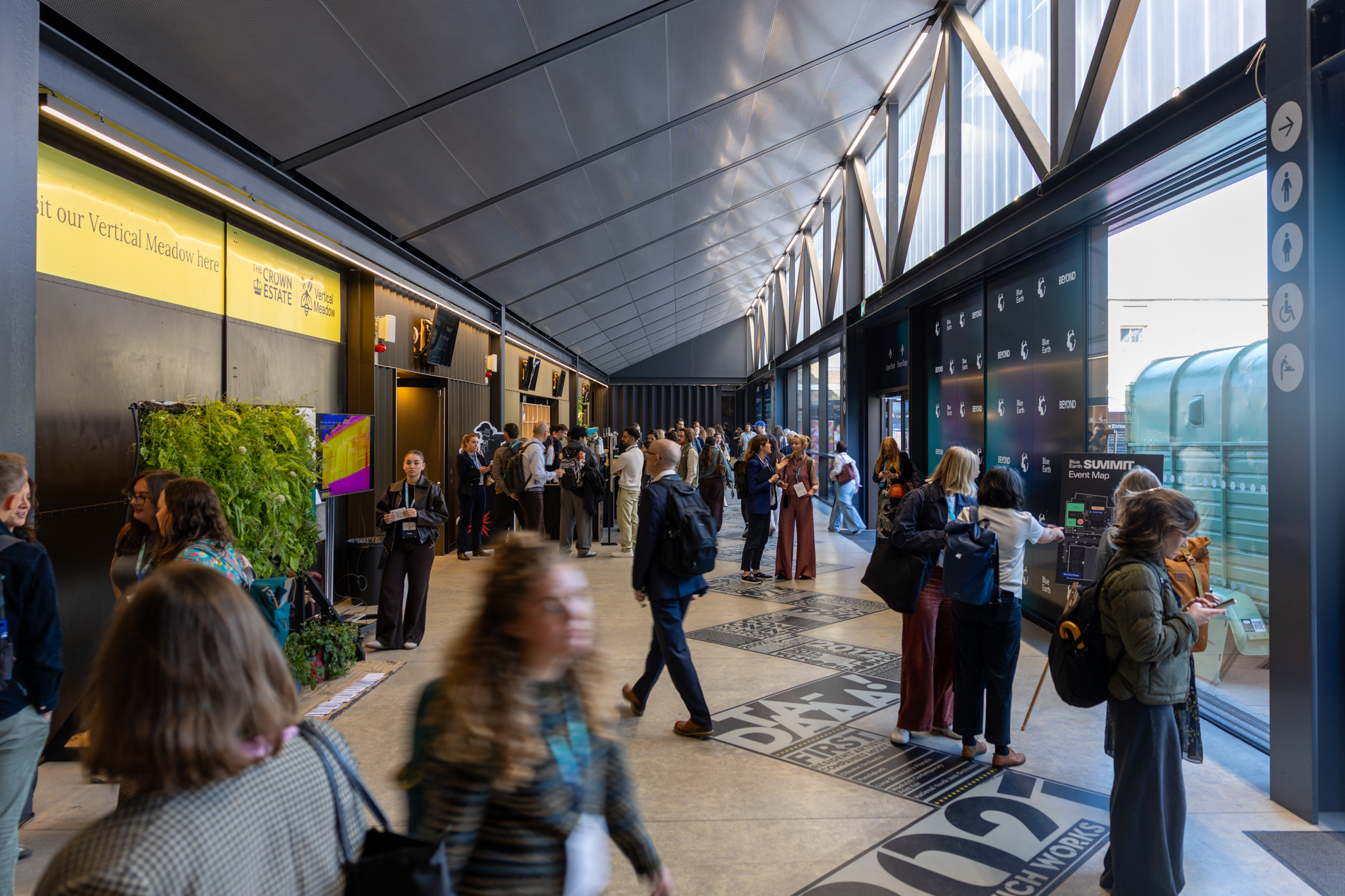
That said, one of my biggest takeaways from this year's Blue Earth Summit was that evidence and engagement are not necessarily the same thing. Granted, a lot of the sessions I attended were geared towards communications and storytelling, and it was interesting to hear speakers approach the sustainability conversation from different directions, particularly as each one kept returning to a similar question: how do you make people care about something that can feel enormous, distant or frightening?
Because climate change is perhaps the ultimate communications problem. Hear me out… The subject is urgent, technically complex and global in scale, but the bigger the numbers become, the harder they can be to comprehend. In fact, one line referenced during the discussion summed it up rather brutally: a single death is a tragedy; a million deaths is a statistic.
Let that sit there for a moment. It’s not that facts are unimportant, but that human beings understand and connect with the world through stories.
One of the examples that stayed with me was the Rang-Tan in My Bedroom campaign. I’d forgotten seeing this on TV, but the minute it started playing, my eyes welled up. Its power did not come from opening with statistics about palm oil, rainforest destruction or biodiversity loss. It started with something small – a child finding an orangutan in her bedroom – before the audience gradually discovers why the animal is there. That matters because the viewer is participating in the story rather than being presented immediately with a conclusion.
Over the course of the three days, I had a lot of interesting discussions around the idea that stories often become more memorable when we are given enough information to begin constructing part of them ourselves. In responsible business communications, there can be a temptation to start with the enormous issue: climate change, biodiversity loss, social inequality, global carbon emissions (or the numbers we’re proud of to show we’re trying to ‘do our bit’).
But sometimes the more powerful starting point is the manifestation of that issue that somebody can actually see… a local sports pitch that keeps flooding, a material that could be reused rather than discarded, a workplace designed differently because people experience their environment differently, a supplier that has changed the way it manages waste. What I’ve come to realise is, these are not smaller issues or ‘wins’, but should be positioned as human-sized ways into much bigger ones.

Another theme running through the storytelling sessions was the danger of relying solely on fear. For years, much environmental communication has focused on what will happen if we fail to act – and yes, there is clearly a place for communicating urgency, because pretending everything is fine would be equally unhelpful. But ‘fear without agency can easily become paralysis’. So, an alternative is to show people what successful action looks like. For example, instead of simply telling a community that flooding will become more frequent, tell the story of local people restoring reed beds around their grass roots football pitch, ultimately changing what happens when heavy rain arrives. Or, instead of only describing the scale of waste generated by construction, show how a project team found a second life for furniture or materials that would otherwise have been discarded.
The difference is subtle but important – because one communicates the scale of the problem, while the other demonstrates the possibility of doing something about it. In short, put sustainability inside the wider story. This phrase ‘trojan horsing’ kept coming up time and again, and while it sounds slightly nefarious, what speakers were talking about was that if every story about sustainability is packaged explicitly as a sustainability story, there is a risk that it reaches an audience already interested in the subject and nobody else.
If we think of it in relation to culture and storytelling: climate does not always need to be the headline. It can exist within stories about people, places, business, design, food, sport or communities. So, in the world of construction, material choice is also a story about quality and longevity, reuse is also a story about resourcefulness, better environmental data is also a story about making better project decisions, local procurement is also about resilient supply chains and communities, designing spaces around different human needs is also about creating environments that work better. As you can tell, I got a lot of ideas.
As I write this on the train home, I think that perhaps the important distinction is that this isn't an argument for replacing facts with storytelling, but making a case that we need both. In construction particularly, claims about sustainability have to stand up to scrutiny – and Agilité is committed to non-financial reporting through our annual Impact Report
So, while data tells us what is happening and identify trends, stories are what help people understand why it matters. For businesses trying to create meaningful change, perhaps the opportunity is to get better at connecting all three, because another line from my notebook after Blue Earth perhaps says it best: Facts won't save us on their own. But the right story might make somebody act on them.

careers@agilitesolutions.com
FR +33 (0) 1 88 61 81 31
UK+44 (0)7 506 403 069
IT +39 (0) 350 9646921
LUX +352 (0) 621 481 103
DE +49 30 2239 9548 83



"*" indicates required fields


